
Tires play a vital role in your safety because tires are the only parts touching the road during Singapore’s frequent downpours. The Tire Labeling Regulation, 11 years old now, gives European consumers essential details about their tire’s performance in three areas: wet grip, exterior noise, and rolling resistance.Wet grip ratings
Your tires’ performance affects braking distances and vehicle control a lot in wet weather. EU tire labels show wet grip ratings from A to E to help you understand your tires’ effectiveness on wet roads. Tests measure wet grip by checking braking from 80 km/h to 20 km/h, based on regulation UN ECE R117. Winter tires get tested against summer tires to check their braking on snowy roads from 50 to 0 km/h.
This piece will help you understand wet grip’s importance in Singapore’s climate. You will learn how experts measure these ratings and their ground effects on your driving. The guide also offers practical tips to pick the right wet grip tires for your car.
Singapore’s creates unique driving challenges year-round. Unlike countries with predictable seasons, Singapore’s unpredictable rain can turn dry roads into slippery hazards in minutes.
Rain falls heavily and often in Singapore. The island gets about 2,340mm of rainfall spread across 167 days each year. These wet conditions persist year-round, but become more intense during the Northeast Monsoon (November to January) and Southwest Monsoon (June to September).
The real challenge for drivers isn’t just the amount of rain – it’s how quickly it falls. A typical downpour can dump 50mm of rain in just an hour. This overwhelms drainage systems and leaves standing water on roads. The smooth asphalt used on Singapore’s roads gets very slick when wet, which significantly reduces tire grip.
City roads develop a dangerous coating of oil, dust, and rubber particles. When rain mixes with this residue, the surface becomes treacherous. Drivers face the highest risk at intersections and busy areas where vehicles stop and start frequently.
Curious whether summer or all-season tires work best in Singapore’s tropical rain? Read our Wet Weather Tires Guide for practical advice
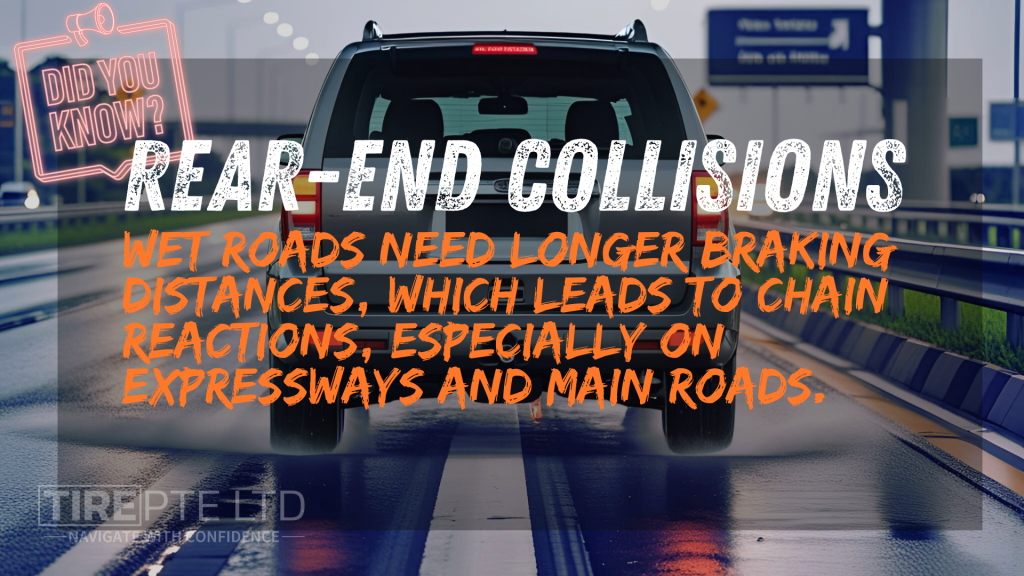
Statistics show why choosing the right tires is vital for wet weather driving. Accident rates jump 30% in rainy conditions. Here are the most common types of incidents:
Wet grip tires help alleviate these dangers through several innovative features. Their tread patterns have wide, deep grooves that quickly channel water away from where the tire meets the road. Quality wet grip tires can move up to 30 liters of water per second at highway speeds.
The rubber used in these tires makes a big difference too. Premium options use that stay flexible and grippy in cool, wet conditions when regular rubber gets hard and slippery. These special compounds create tiny wiping actions against the road, clearing away water for better tire-to-road contact.
Today’s wet grip tires also use “sipes” – small slits in the tread blocks that open on contact with the road. These extra edges grip wet surfaces better and can increase contact area by up to 35% compared to tires without sipes.
The wet grip rating shows how well a tire stops on wet roads. A Class A tire can stop up to 18 meters (about four car lengths) shorter than a Class E tire when braking from 80 km/h in wet conditions – enough to prevent a serious crash.
You need to know standard measurement protocols to understand tire wet grip ratings. The EU tire labeling system came out in 2012. It gives a clear way to evaluate and compare how well different tire models grip in wet conditions.
The wet grip index (G) shows how well a tire brakes on wet surfaces compared to a standard reference test tire (SRTT). This comparison helps get consistent results from all manufacturers. The measurement uses this formula: G = (μcandidate tire/μSRTT) × 1.25 + C, where C acts as a correction factor.
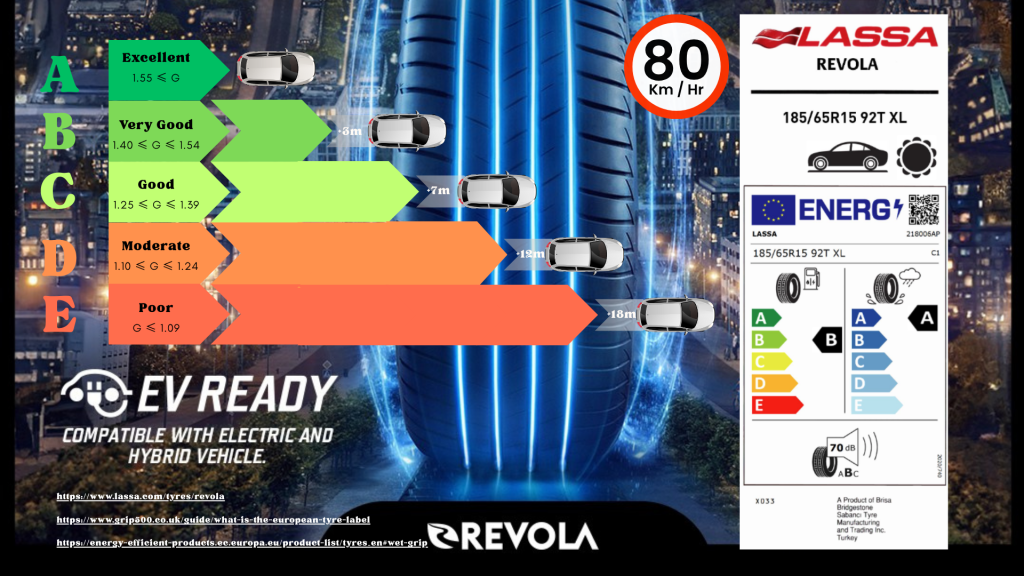
The gap between each class (like A and B) means about 3-6 meters in stopping distance. The total difference from class A to E can be over 18 meters – that’s four car lengths. This big variation could save lives on Singapore’s rain-soaked roads.
Wet grip ratings need strict testing to stay accurate and repeatable. ISO standards say you can test using either a vehicle or a trailer method.
The vehicle method uses a passenger car with Antilock Braking System (ABS) and special instruments. Here’s how the test works:
The track keeps 1.5 mm of water to match real wet roads. Tests must stay within 3% variation to count as valid, which makes the results reliable.
Each tire gets tested against the same reference tire (made by Michelin now), so you can compare all brands and models fairly.
Tread patterns make a big difference in wet grip. The main job of tread patterns is to push water away where the tire meets the road. This stops hydroplaning and keeps the grip strong.
Research using fluid-structure coupling theory shows that transverse grooves really help with wet grip. Tires with outer transverse grooves grip about 8% better than ones with just straight grooves. Adding both outer and inner transverse grooves can boost wet grip by about 10%.
The science works because the tread can:
A microscopic water film still stays between tire and road, which cuts down wet grip. That’s why makers also work on rubber compounds. They add silica to help the rubber stay flexible and sticky in wet weather.
Wet grip gets worse as tires wear down. The EU label warns that “wet grip decreases when the tread is worn and the risk of aquaplaning increases”. Regular tread depth checks help keep you safe during Singapore’s frequent rain.
Not sure when to change your tires? Read our When to Replace Your Tires for Safety guide for practical tips.
Wet grip performance makes a real difference in how tires behave on the road. The grip class of your tires could mean the difference between safety and danger in actual road conditions.
Better wet grip tires prove their worth during emergency braking. Tests show each wet grip rating class (from A to E) adds about 2.5 meters to stopping distance when braking from 50mph. An ‘A’ rated tire stops 18 meters earlier than an ‘E’ rated tire on wet roads.
This gap equals about four car lengths. The difference could determine if you stop safely or hit something ahead. Continental’s PremiumContact 7 showed great wet braking results in recent tests, though performance varied between new and worn states.
Even tires with similar ratings behave differently in various conditions. To name just one example, see the Bridgestone Potenza Sport, which delivers excellent wet braking when new and worn. This consistency helps maintain safety throughout the tire’s life.
Tires with high wet grip make a huge difference in rainy weather. Michelin’s Pilot Sport 5 stands out because it maintains steady performance in wet conditions. The tire responds well to steering and has a progressive understeer balance. The Goodyear Eagle F1 Asymmetric 6 combines safe understeer with sporty handling, which makes it predictable in wet conditions. Lassa’s Competus HP3 also deserves mention — designed for SUVs, it delivers an ‘A’ wet grip rating, stable cornering, and reliable braking on Singapore’s rain-soaked expressways, making it a practical alternative to the premium giants.
Advanced tread compounds and designs create this stability, generate friction to control your vehicle. Channels and sipes help push water away from where the tire meets the road. These features let you drive confidently through corners on Singapore’s slick roads.
Want to understand how tread design affects safety? Check out our guide on Tyre Tread Types and Uses.
High-performance wet grip tires come with certain compromises. Better grip means higher , which affects your fuel economy. These tires give you improved grip and stability at higher speeds through an optimized ‘tread patch’. However, your engine needs more power to overcome the increased tire-to-road friction.
To learn more about how rolling resistance impacts fuel efficiency and why it matters for EVs, read our guide on Understanding Rolling Resistance: What Makes Tires EV-Compatible.
Hankook’s Ventus S1 evo3 strikes a good balance. It offers laudable wet grip while keeping energy use low. The Yokohama Advan Sport V107 delivers a sporty feel with quick steering response, but doesn’t brake as well in wet conditions. Lassa’s Revola, on the other hand, combines an ‘A’ wet grip rating with fuel-saving rolling resistance, making it a strong contender for Singapore drivers who want both safety in rain and long-term efficiency.
Choosing tires means finding the right balance between safety and running costs. Singapore drivers often find this trade-off worth it. Heavy rainfall is common here, and better wet grip can be crucial for safety.
Your safety on Singapore’s wet roads depends a lot on choosing the right tires. You need to know what features to look for when buying new tires. This knowledge could save lives.
The EU tire label shows you how well tires grip in wet conditions with a simple A-to-E rating. A tires give you the best grip, while E tires are the weakest. The stopping distance between each class (like A and B) is about one car length (3-6 meters). This is a big deal as it means that Class A tires stop 18 meters – four car lengths – shorter than Class E tires on wet roads.
The label has a QR code you can scan to get complete product details from the EPREL database. This digital tool gives you more information about tire performance than what you see on the physical label.
Silica-enriched compounds changed tire technology forever. These compounds made wet grip better without losing other performance benefits. Continental’s ContiEcoContact CP brought this technology to market in 1995, cutting braking distances on wet roads by nearly half compared to older tires. Today, modern silica-based tires like the Lassa Competus HP3 and Revola use similar advancements to give Singapore drivers shorter stopping distances, better traction in heavy rain, and improved fuel efficiency without the premium price tag.
These modern compounds stay flexible when wet. They create tiny wiping actions against the road to grip better. Tires now grip 15% better in wet conditions and last just as long. Singapore’s roads get a lot of rain, and silica-based tires help your car stay stable even in sudden downpours.
Read our When to Replace Your Tires for Safety
Helps drain water and stops your car from sliding on wet roads. The law says you need at least 1.6mm of tread. You measure this across three-quarters of the tire’s center. Safety experts say you should replace tires before they get this low.
Your tires need replacing when the wear indicators are level with the tread. Tests show that braking distances in wet conditions get 44% longer as tread wears down from 3mm to 1.6mm.
Check your tread depth often as part of your car maintenance. This keeps you safe in Singapore’s wet weather. Not sure about your tires’ condition? Need help picking tires with good wet grip? WhatsApp us now for quick tire safety advice.
????Watch our Quick $1 Coin Test on TikTok
Misconceptions about wet grip tires can lead Singapore drivers to make poor purchasing decisions. Let’s get into some common myths that might affect your tire choices during the monsoon season.
All-season tires often sacrifice wet-road traction to improve mobility in snow and subfreezing temperatures. These tires provide versatility in weather conditions of all types, but they don’t really shine in any specific scenario. Summer tires perform better than all-season variants on wet roads because their wide tread voids push water away faster from the contact patch and use more pliable rubber compounds.
The Continental AllSeasonContact 2 is different from other all-season tires and has high ratings for wet road performance. Notwithstanding that, specialized wet-weather tires might give you better braking ability and reduced hydroplaning risk compared to standard all-season options in Singapore’s rainy conditions.
A tire’s price doesn’t determine its performance or quality. Budget tires sometimes show ratings similar to premium brands on the EU label, which confuses many buyers. Yes, it is true that the wet grip label only shows straight-line braking ability. Other factors like cornering grip, progressive handling, and performance consistency aren’t measured.
Tires with similar wet grip classifications might work differently in ground conditions. The label doesn’t look at grip on dry surfaces, wear resistance, and aquaplaning resistance. Whatever the cost, you should check the EU label’s wet grip classification (A-E) to get objective performance data before buying.
Tread depth is a vital part of water evacuation, but it’s just one factor that affects wet grip. The rubber compound composition, tread pattern design, and tire width all help determine overall wet performance.
Of course, you need to maintain the legal minimum tread depth of 1.6mm. New tires with good tread can still perform poorly if they use inferior rubber compounds or ineffective tread designs. The best wet grip comes from both proper tread depth and design—deep grooves should channel water away while sipes create additional biting edges for traction.
Note that tread compound plays a big role too. Silica-enriched compounds are a great way to get traction on wet surfaces because they stay flexible when conventional rubber hardens.
????Watch our Quick $1 Coin Test on TikTok
On Singapore’s rain-soaked roads, you need tires that don’t just roll — they protect. Wet grip ratings directly influence how safely you can brake, steer, and stop in sudden downpours. Choosing a tire like the Lassa Competus HP3 or Revola, both engineered with advanced silica compounds and rated for excellent wet grip, ensures your family stays safe every time the skies open up.
A tire with an A-rating stops up to 18 meters sooner than an E-rated one. This could be the difference between stopping safely and getting into an accident. You should always check the EU label’s wet grip classification before buying new tires.
Silica-based compounds work better in wet conditions and create that vital microscopic wiping action against road surfaces. Your tread depth must stay above the legal minimum of 1.6mm. Worn treads make your braking distance much longer, whatever the tire’s original rating.
These ratings help you make smart choices about your vehicle’s safety. High-grip tires might use a bit more fuel, but they keep you much safer during Singapore’s frequent rainstorms.
Stay safe on the roads. Not sure about your current tires or need help picking the right wet grip option? WhatsApp us now for a quick tire safety check. Safe driving isn’t just about being careful – you need tires that can handle our unique weather too.
Understanding wet grip ratings is crucial for safe driving in Singapore’s frequent downpours, where the right tires can mean the difference between stopping safely and a collision.
• Class A wet grip tires stop up to 18 meters shorter than Class E tires on wet roads—equivalent to four car lengths in emergency braking situations.
• Check the EU tire label’s wet grip rating (A-E scale) before purchasing, as this standardized system provides objective performance comparisons across all brands.
• Choose tires with silica-based compounds for superior wet traction, as they maintain flexibility in wet conditions and can nearly halve braking distances.
• Maintain tread depth above 1.6mm minimum, as worn treads increase wet braking distances by up to 44% regardless of the tire’s original rating.
• Price doesn’t guarantee better wet grip performance—budget tires sometimes match premium brands’ ratings, making the EU label your most reliable guide.
In Singapore’s tropical climate with 2,340mm annual rainfall, investing in proper wet grip tires isn’t just about performance—it’s about protecting yourself and others on the road during those sudden, intense downpours that can transform dry roads into hazardous surfaces within minutes.
Q1. How do wet grip ratings affect braking distance in rainy conditions? Wet grip ratings significantly impact braking distance on wet roads. A Class A rated tire can stop up to 18 meters (about four car lengths) shorter than a Class E rated tire when braking from 80 km/h on wet surfaces. This difference can be crucial in preventing collisions during Singapore’s frequent downpours.
Q2. What should I look for when buying tires for wet weather performance in Singapore? When purchasing tires for Singapore’s rainy climate, check the EU tire label for the wet grip class (rated A to E, with A being the best). Also, consider tires with silica-based compounds for better wet traction, and ensure the tread depth is well above the legal minimum of 1.6mm for optimal water dispersion.
Q3. Are all-season tires the best choice for Singapore’s wet roads? Not necessarily. While all-season tires offer versatility, they don’t always provide the best performance in specific conditions. For Singapore’s predominantly rainy weather, specialized wet-weather tires often offer superior braking ability and reduced hydroplaning risk compared to standard all-season options.
Q4. How does tread depth affect tire performance in wet conditions? Tread depth plays a crucial role in water evacuation and preventing aquaplaning. As tread depth decreases, braking distances in wet conditions can increase significantly. For instance, braking distances can increase by up to 44% when tread depth decreases from 3mm to 1.6mm. Regular tread depth checks are essential for maintaining safety in wet weather.
Q5. Do more expensive tires always provide better wet grip? Price alone doesn’t determine a tire’s wet grip performance. Some budget tires may have wet grip ratings similar to premium brands. Always check the EU label’s wet grip classification (A-E) for objective performance data, regardless of the tire’s price. Remember that the label only indicates straight-line braking ability and doesn’t account for other factors like cornering grip or performance consistency.