

A Singapore Driver’s Guide to Uneven Tyre Wear (That’s Not Always Alignment)
Uneven tyre wear in Singapore is more common than most drivers realise. You walk out to your car, glance down, and something feels off. One tyre looks noticeably more botak than the rest — and if you’re driving in Singapore, there’s a good chance it’s the front left tyre. When that happens, most drivers get told the same thing: “Need wheel alignment Singapore.” It sounds logical, and sometimes it’s true. But for many cases of front left tyre worn out and car tyre uneven wear, alignment is only part of the story — and sometimes not even the main one.
I’m writing this as the in-house writer for Tire Pte Ltd to help you understand why front left tyre wear is so common here, why you can have uneven tyre wear Singapore even when your alignment numbers look “within spec,” and how to fix it through the right mix of driving habits, tyre rotation Singapore, and timely checks. This guide is built for real life: HDB ramps, condo carparks, spiral turns, and daily driving.
If you’re dealing with one tyre worn out faster, causing uneven tyre tread wear, this article will help you make sense of it — and stop repeating the same cycle of “replace tyre → align → replace again.”
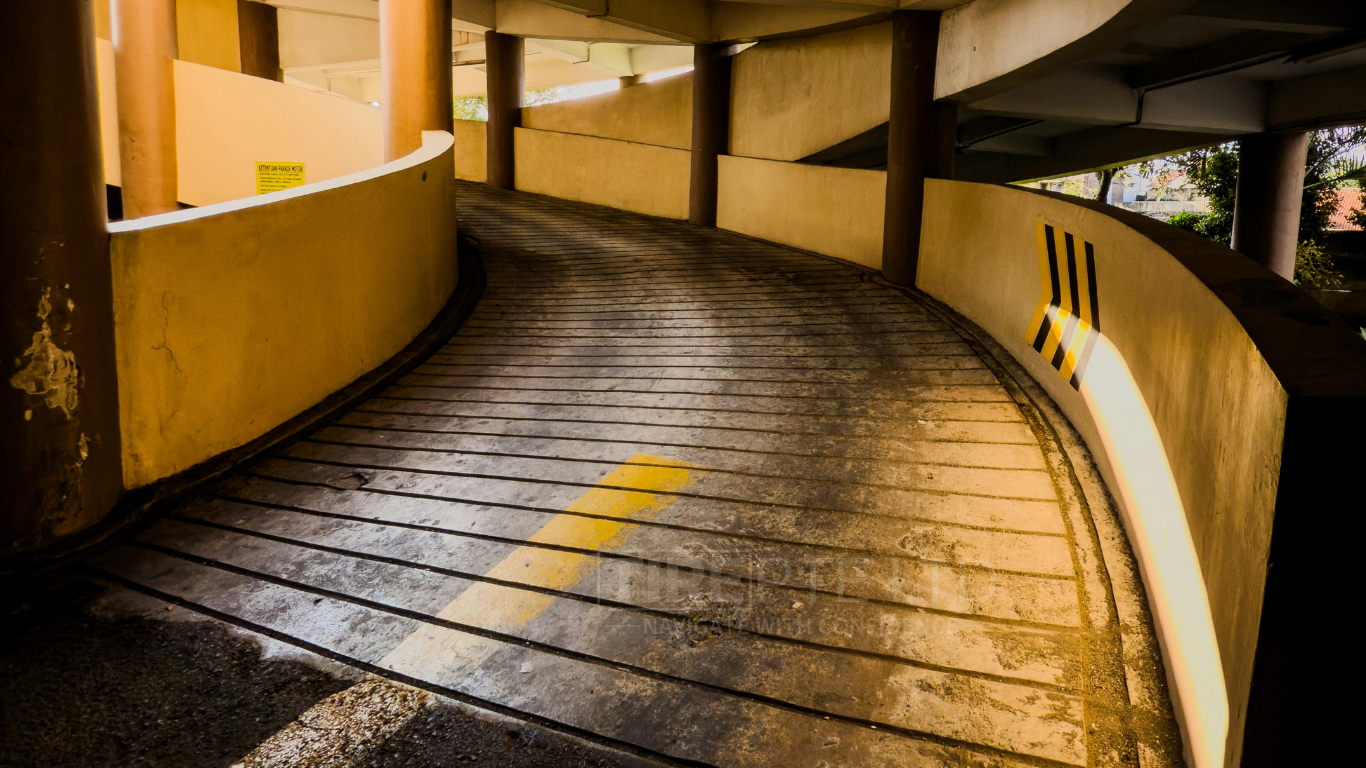
If you’re busy, here’s the core idea in plain language. In Singapore, Singapore carpark tyre wear is a major contributor to uneven tyre wear causes, especially for drivers who enter and exit MSCP ramps daily. Most MSCPs are one-way, and to go up and down you typically make repeated right turns. That repeated turning, combined with incline and high-grip concrete, puts extra force on the outside wheel — and in right turns, that outside wheel is usually the front left.
That’s why the front left tyre worn out problem appears so often here, even when:
The biggest difference-maker for most drivers is not a one-time alignment. It’s building a routine around when to rotate tyres, learning a few habits that reduce ramp scrubbing, and understanding whether the wear pattern is caused by tyre rotation vs alignment (two different things).
If you’re unsure why one tyre keeps wearing faster, bring the car down or send us photos of your tyres. WhatsApp +65 6925 5296. A short assessment can often save you from replacing tyres earlier than necessary.
Cars aren’t magic. They obey basic physics. Two forces explain most cases of car tyre uneven tread wear: weight transfer and friction.
Weight transfer during turning: why your front left takes the hit
When your car turns right, inertia shifts weight toward the outside of the turn. In a right turn, the outside side is the left side of your car. That means the front left tyre is asked to carry more load. More load means more rubber is pushed into the road surface. More contact pressure means more friction. More friction means faster tread wear or uneven wear.
This is one of the clearest explanations for why front left tyre worn out shows up so often as a Singapore complaint. If you repeat that right turn once in a while, it’s no big deal. But repeat it multiple times a day — every morning, every evening, every carpark — and you create a predictable tyre wear pattern.
That’s the difference between occasional wear and a recurring “front left tyre always die first” issue.
The MSCP effect: turning + incline + decline + momentum
Now combine turning with the incline of a ramp. Many Singapore ramps are narrow, curved, and steep enough that drivers keep a bit of momentum to climb smoothly. When you’re accelerating slightly uphill while turning, the tyre is handling two jobs at once: turning force (lateral) and climbing force (longitudinal). That multiplies friction, especially on the outside wheel.
This is why many drivers feel shocked when they experience uneven tread tyre wear even after alignment. Alignment checks the geometry of your wheels. But it doesn’t change the fact that your daily routine keeps loading the same tyre over and over again.
If you want a simple explanation: your carpark is training your tyre to wear unevenly.
Why ramps “eat” tyres: safety tyre texture vs tyre tread life
Most ramps are concrete, often grooved or ribbed for traction. Those grooves are there to improve grip in wet conditions and prevent skidding. It’s a safety design choice. The downside is that this rough surface scrapes rubber harder than smooth road.
So if you regularly drive through a tight ramp and hold your steering lock while the car is under load, you’re basically sanding the tyre. This is why drivers searching for tyre wear due to carpark ramp are not wrong — it’s a real phenomenon.
Wheel alignment is important. But it isn’t always the main reason you see tyre wear one side only or a single tyre wearing faster.
A classic alignment problem often comes with:
But MSCP-related wear looks different. Often it shows as gradual shoulder wear, usually on one side, commonly the outer edge. In Singapore, it frequently shows on the front left — because the turn direction and ramp design are repeated. That’s why you can experience tyre wear not alignment issue — even though the workshop’s first instinct is to check alignment.
If your alignment printout looks normal and the car drives straight, but you still get one tyre worn out faster, you’re likely seeing a usage-driven pattern.
So instead of asking only “Do I need wheel alignment?”, a better question is: Do I need wheel alignment or tyre rotation? Because those are different fixes.
If there’s one habit that saves Singapore drivers money, it’s this: tyre rotation Singapore done consistently.
Tyre rotation doesn’t magically remove the forces of your daily route. It doesn’t change the ramp design. But it spreads the wear so that one tyre doesn’t suffer alone. That’s why rotation is one of the best ways to prevent uneven tyre wear and extend tyre lifespan Singapore.
How rotation helps with front-left wear
If your front left tyre keeps taking the biggest hit, moving it to a different position allows other tyres to share the burden. Over time, the entire set wears more evenly.
This is why people searching tyre rotation benefits often see results like:
Rotation doesn’t only help your wallet; it helps your safety too.
When to rotate tyres in Singapore
A practical, real-world guide for when to rotate tyres:
This is your tyre rotation interval baseline. It’s not rigid — but it’s a helpful Singapore-friendly rule of thumb.
If you only rotate after you see your tyre become botak on one side, you’ve waited too long. Rotation works best before the wear becomes obvious.
You don’t need complicated techniques. Small driving changes can dramatically reduce reduce tyre wear.
Slow down in carparks
Most Singapore MSCP tyre problem wear happens because the tyre scrubs hard under load. Lower speed reduces lateral force. It reduces how aggressively the tread is dragged across rough concrete. In simple terms: slow down, and you save tread.
If you’ve ever wondered how some drivers get better mileage out of tyres without changing brands, often it’s because they crawl gently through ramps.
Use smoother steering instead of holding full lock
Holding full steering lock increases deformation and rub. If you can steer more progressively, release a little lock once you clear the tightest section, and avoid a sharp “lock and drag” motion, you reduce scrubbing.
This directly helps drivers dealing with outer shoulder tyre wear.
Take a wider line when safe
A wider line reduces the steering angle, which reduces scrubbing. It’s a small change but noticeable over time.
Watch tyre pressure (because it changes the wear pattern)
Tyre pressure doesn’t usually cause a single tyre to wear faster by itself, but it can worsen wear on the shoulders and create misleading patterns. Correct pressure reduces irregular contact. That’s why many cases of car tyre wear pattern issues improve when drivers maintain correct pressure consistently.
Understanding the language of tyre wear helps you diagnose the cause quickly:
If your issue looks like tyre wear one side only, especially on a tyre that sits at the front left position for long periods, it’s worth reviewing your rotation history and daily route first.
Drivers searching EV tyre wear Singapore are asking the right question. EVs often wear tyres faster because of weight and instant torque. In an EV, that front-left ramp wear pattern can show up sooner.
If you drive an EV and your tyres become botak earlier than expected, don’t assume you bought the wrong tyre immediately. First check:
This applies to electric car tyre wear, and also to SUVs and MPVs, where weight and load increase wear.
If you ignore uneven tyre wear, you pay in more ways than one.
A tyre that becomes botak early can lead to:
If you’re trying to improve tyre lifespan Singapore, the cheapest path is prevention: rotation, gentler carpark driving, and timely inspections.
You don’t need to do every single point every time — but a quick monthly glance will help you catch trends early. If you’re unsure why one tyre keeps wearing faster, bring the car down or send us photos of your tyres. WhatsApp +65 6925 5296. A short assessment can often save you from replacing tyres earlier than necessary.
Q1. Why is my front left tyre worn out faster?
In Singapore, repeated right turns through MSCP ramps create a predictable load shift onto the front left tyre. This is one of the most common uneven tyre wear causes here and is often linked to Singapore carpark tyre wear rather than purely alignment.
Q2. Is uneven tyre wear dangerous?
Yes. Uneven tyres reduce wet grip and braking consistency. A tyre that is more botak than the others increases risk in emergency stops and rainy road conditions.
Q3. Does wheel alignment fix uneven tyre wear?
Sometimes — but not always. If your wear is caused by ramp turning patterns and rotation neglect, alignment may not stop the issue. In many cases, the best fix is combining tyre rotation Singapore with better carpark driving habits and only doing alignment when symptoms suggest a geometry issue.
Q4. How often should I rotate tyres in Singapore?
A practical tyre rotation interval is every 9,000–10,000 km. If you are a heavy MSCP driver or drive an EV, 8,000–9,000 km is safer.
Q5. Can carparks cause tyre wear?
Yes. This is a real Singapore phenomenon. Multi storey carpark tyre wear happens because ramps are inclined, tight, and made of high-grip concrete surfaces. Over time this creates carpark turning tyre wear, often showing up at the front left tyre.
Q6. Why only one tyre worn out?
A single tyre wearing faster often points to either a consistent usage pattern (like MSCP ramps) or a localised issue at that wheel (brake drag, suspension wear). If it’s consistently the same tyre position and your alignment looks okay, it’s likely usage-based.
Q7. Does driving style affect tyre wear? Absolutely. Drivers who slow down through ramps and avoid aggressive steering reduce shoulder wear and extend tyre life. If you want to reduce tyre wear, start with carparks — that’s where a lot of “hidden wear” happens in Singapore.
