

Correct tire pressure is not something one can choose to do or not do in car maintenance, more so in hybrid cars, which have been uniquely designed for fuel economy but still to ensure fine performance. It is for this reason that in this extensive guide, find out the reasons you can’t afford to ignore tire pressure when keeping your hybrid car efficient and safe. With the advent of automotive technology, innovations such as tire pressure sensors, the low tire pressure light, and the flashing tire pressure light have further emphasized the need for proper tire pressure—tweedling it to the need to perform periodic checks on this part of vehicle maintenance.
The following parts of this article explain in detail why correct tire pressure in a hybrid car is important, and further explore how the perfect tire pressure chart fits different models and various conditions. It teaches one how to check pressure with a tire pressure gauge and shares some useful tips to help one keep the right pressure. It further debunks some of the common myths circulating about tire pressure in hybrid vehicles, from the tire pressure light blinking to concerns about tire pressure sensor faults, and winds up with key takeaways for the sustainability of optimal tire performance. Grasping just how pivotal tire pressure is and following these professional recommendations can help ensure your hybrid car is fuel-efficient, green, and, above all, safe on the road.
Proper Tire Pressure in Hybrid Cars
Correct tire pressure in hybrid vehicles has impacts not only on the efficiency of the vehicle but also on the safety of the vehicle occupants. Hybrid vehicles, due to heavy battery weight and high instantaneous torque that characterizes this breed, put extra demands on tires that may greatly influence tire wear and general vehicle performance.
Fuel Efficiency Impact
One of the major issues with regards to having the wrong tire pressure in Hybrid cars is its effect on fuel efficiency. Hybrid cars are supposed to be gas-efficient, and correct tire pressure is part of the total strategy of the car to further that efficiency. Low tire pressure will increase rolling resistance, meaning an engine in a car works more to propel the vehicle as it uses more fuel. On the other hand, while it minimizes rolling resistance with optimal tire pressure, it would maximize the energy and fuel efficiency of the car. Using low rolling resistance tires designed even for hybrid vehicles would add even more fuel efficiency and extend the driving range for such a vehicle.
Safety Considerations
Another vital factor that has been affected in hybrid vehicles by tire pressure is safety. Proper tire pressure will ensure proper differentiation of your vehicle on the road, which is very fundamental in case of stable handling and efficient braking. Hybrid cars often come fitted with regenerative braking systems that are enabled by good traction to the tires. The system’s efficiency, therefore, gets compromised with low tire pressure; this results in longer stopping distances, hence increasing the risk of accidents. It is advised to constantly check the pressure in the same way one would check for wheel alignment and tire rotation for maximum vehicle safety and performance.
With periodic monitoring and maintenance of tire pressure, Hybrid owners are given the chance to give the best performance, safety, and overall durability for their vehicle. Regular inspection of tires allows them to sustain all the different features of a hybrid vehicle including its heavy batteries and certain driving characteristics.
Manufacturer Recommendations
Recommended tire pressures for Toyota hybrid vehicles are model-specific and are usually placed on the B-pillars, inside the glove box lid, or in the owner’s manual of the car. For example, the manufacturer has given a table showing the general inflation pressures for all current models within the Toyota passenger vehicle range. It’s therefore, vital and necessary that automobile users should check these values to ensure that their tire performance and vehicle safety is at the best.
General Guidelines
Although there is not ever government recommendation in regard to recommended pressure, every manufacturer has given particular values of inflation that should be maintained. For instance, Honda HCH II 2006 recommends tire pressure of 32 psi for the best riding experience. However, some drivers do so out of individual preference for ride feel and fuel efficiency. It is noted that excessively increasing tire pressure over recommended settings can affect the ride comfort by increasing the perceived road bumps and irregularities.
Many drivers begin with pressures near the maximum allowable sidewall pressure as indicated on the tire to increase mileage but at the expense of firmer ride. One should, however, strike a balance between high and low pressures to ensure that excessive tire wear from either one is checked in order for safety to prevail. Adhering to manufacturer recommendations and personal driving conditions, it is critical to keep rein on tire pressures consistently to retain performance and life in hybrid car tires.
Required Tools
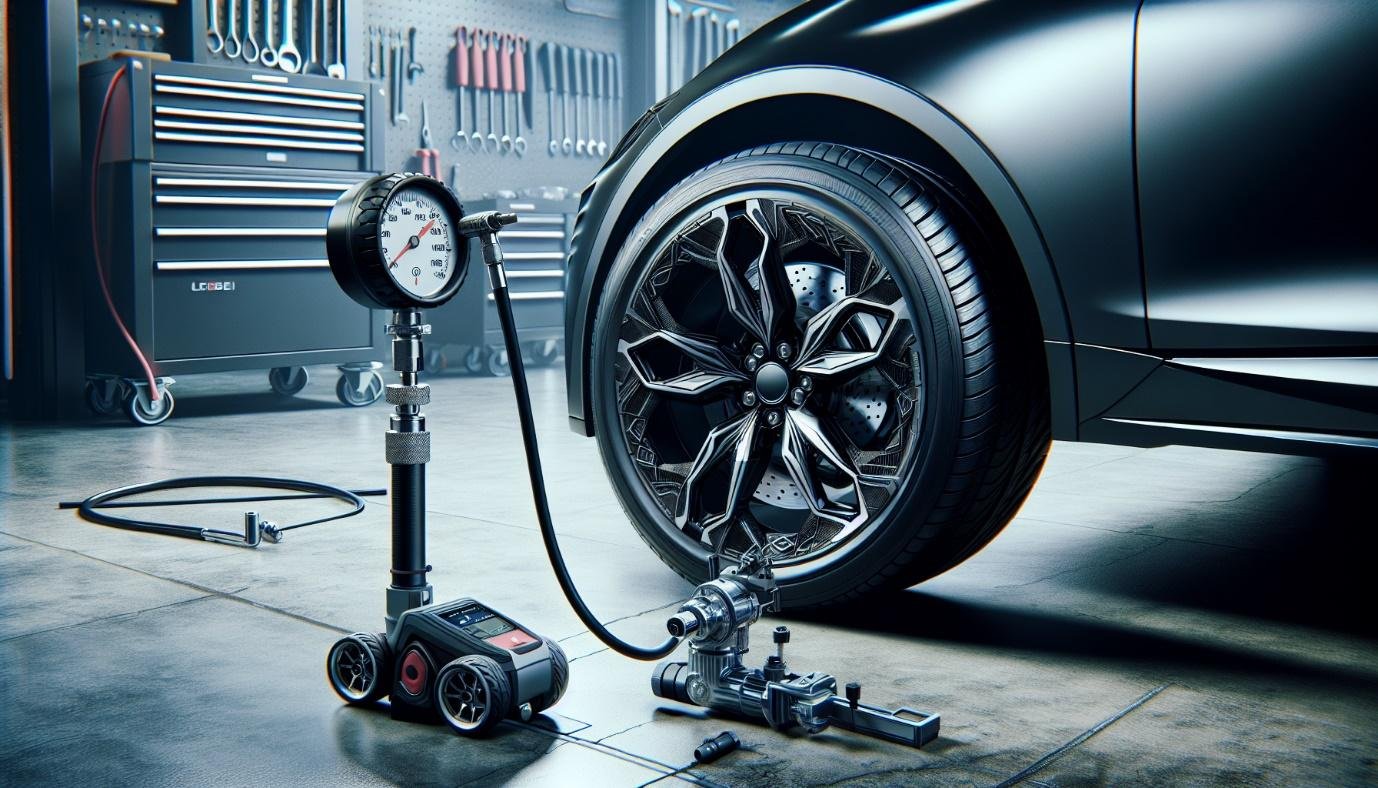
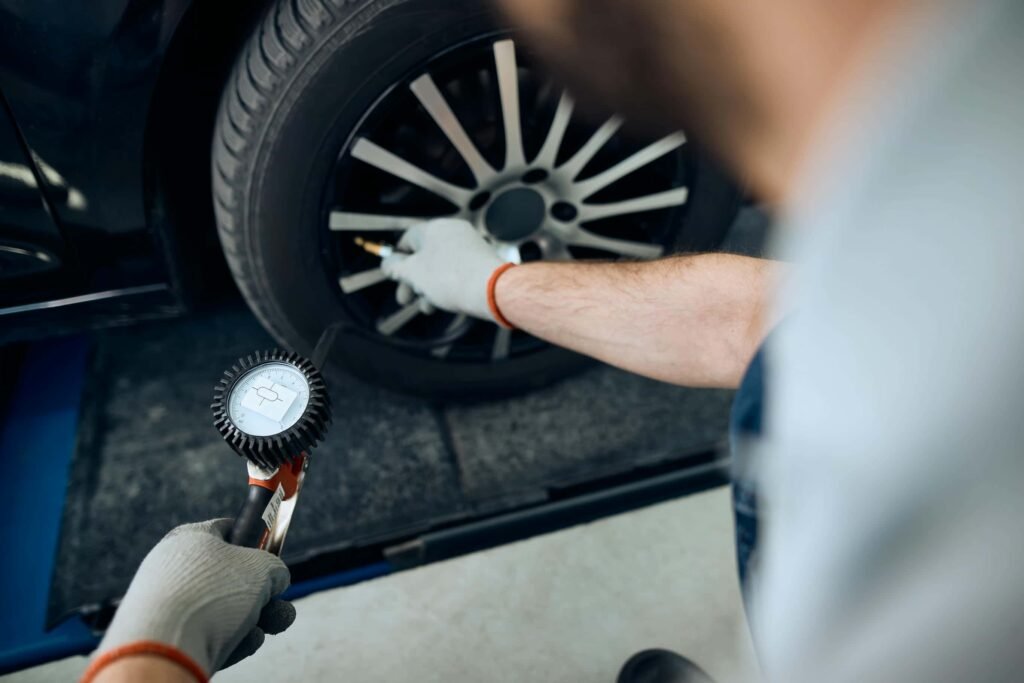
There are two major tools needed to effectively check tire pressure: a tire pressure gauge and an air compressor. If in the form of a pencil gauge or as a digital gauge, the tire pressure gauge itself is a significant device for(true readings of the pressure [16]. Most gas stations have air compressors, but some portable units may also be plugged into the car’s 12-volt outlet to inflate the tires.
Steps to Check
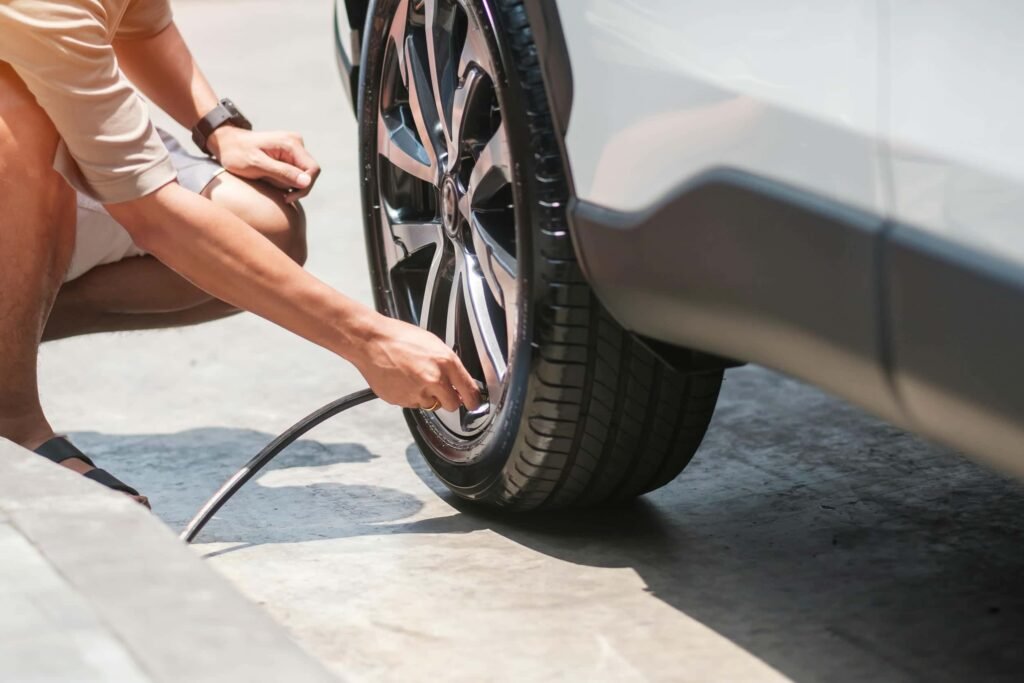
First, drive the least possible so to enable the tires to be cold. Then get the recommended tire pressure. It can be located on the sticker attached to the inside of the driver’s side door jamb or in the owner’s manual. After removing the valve cap from the tire, press the gauge firmly onto the valve stem, and take a reading. If necessary, fire up the air compressor and check/adjust the pressure. The hose has to be long enough to extend to all four tires. Keep in mind that a check of the pressure should occur when they are cold; if the tyres have been driven on, then it will give a misleading reading .
Common Mistakes to Avoid
People who do remember to check their tire pressure make the common mistake of doing so with warm tyres. It won’t give an exact reading. Failure to replace the valve caps after inspection will allow dirt into the valve stem, this may cause air leakage and hence cause low reading on the gauge or incorrect reading. Vision checking of tire pressure is not enough, hence physical checking must be done using a gauge. Checking pressure regularly is very vital in helping to prolong the life of the tire, this helps in saving fuel, and also ensures safety.
Regular tire inspection for a hybrid vehicle ensures that the tires are in good condition to offer their services to the owner without failing. The recommended interval for tire inspection is every 5,000 kilometers, which shall include checking the pressure and depth of the treads of tires. Following the recommended rotation of tires by the manufacturer ensures equal wear that will maintain the structure of the tire for safety purposes.
With Tire Pressure Monitoring Systems (TPMS), the potential for crashes occurring because of tire failures is drastically reduced. There are two major types of TPMS used in vehicles today: Direct TPMS and Indirect TPMS. With direct systems, a sensor located at each tire reports information back to the driver in real time in the event of a sudden loss in pressure. On the other hand, indirect systems extrapolate tire pressure from already installed vehicle sensors, such as those of the anti-lock braking system. Under these circumstances, hybrid TPMS that combines both direct and indirect systems can offer a cost-effective solution while assuring high performance and safe vehicle operation because it detects up to four deflated tires at the same time.
Besides, careful monitoring and running on TPMS will help ensure that recommended tire pressure is maintained, low-rolling-resistance tires are purchased/bought, and winter tires are run in the winter months to enhance fuel economy and driving safety. In any case, regular checks would ensure that the tires can sustain the peculiarities of the hybrid vehicle to optimize safety and performance.
Some myths found their way into the hybrid car maintenance regarding tire pressure creating confusion, thus almost making the right vehicle maintenance impossible. Addressing these myths will ensure a long service life and better fuel economy in hybrid vehicles.
Myth 1: Overinflating for Better Mileage
There is a general misconception that overinflating tires can give better mileage by reducing rolling resistance. This may be partially true, but the improved fuel efficiency comes at the expense of increased tire wear and lessened traction. It is a definite negative for vehicle handling and safety on wet roads. Overinflation also makes a vehicle more vulnerable to road hazards and potholes.
Myth 2: Underinflating for Better Traction
Another all-too-common myth is that underinflation will allow for better traction on rough or slippery surfaces. While underinflation does increase the apparent contact area of the tire with the road, it also results in uneven tire wear, mostly at the edges of the tire. Apart from giving it a shortened life, it helps to reduce fuel efficiency. More importantly, underinflated tires are subject to overheating, easily leading to tire failure.
The clear implication of both these myths is that one should always use the recommended tire pressure from the manufacturer to maximize the relative balance among fuel economy, tire life, and safety for a hybrid car. This opacity also makes another essential point about hybrid car maintenance: regularly checking and adjusting the tire pressure with a good tire pressure gauge.

Understand the cardinal role that maintenance of the optimum tire pressure plays in hybrid cars, both for performance and safety. We have gone through this guide to show reasons why it is important to have properly inflated tires: for fuel efficiency, traction, and overall longevity of a vehicle. Applying some practices, like regular tire pressure checks, following the recommendations by manufacturers, and debunking common myths, hybrid car holders can be assured of their vehicle’s peak performance. The given ideas should make this aspect less intimidating and more accessible for those seeking to give a better drive to their hybrid cars.
The impact of tire maintenance is wide-ranging, stretching from a vehicle’s performance to environment preservation by way of improved fuel economy and reduced emissions. Since hybrid cars play an important part in the move to more sustainable transportation alternatives, the proper understanding and application of correct tire pressure maintenance become ever more paramount. It might be stated that the future for hybrid vehicle maintenance would be much brighter if further research and innovation are encouraged and promoted in the improvement of tire technology and monitoring system, always moving towards a much safer, more fuel-efficient, and environment-friendly driving experience.
1. Is a tire pressure of 35 PSI considered too high?
A pressure of 32 to 35 PSI is usually ideal for most cars. The pressure can safely be brought down as low as 20 PSI, but it should not be done so. Any pressure less than 20 PSI is actually considered a flat tire. PSI means Pounds per Square Inch.
2. What is the recommended PSI for tires?
The importance of the right tire pressure resides in both safety and fuel economy, and increases the life expectancy of tires. While every different vehicle is going to have its recommended optimal PSI, most fall within the 28–36 PSI range.
3. What is the standard tire pressure for cars in Singapore?
Standard pressure for small-sized cars in Singapore is typically 30 PSI, 36 PSI for medium-sized, and 42 PSI for large cars. It should be noted that, compared to recommended cold tire pressures, tire pressures can easily increase by 4-6 PSI when the tires are warm.
4. Is 40 PSI an acceptable pressure for tires?
For most situations, 40 PSI will be adequate. In fact, many modern tires are designed for 44 PSI or maybe even slightly more. While pressures of 44 PSI or higher are suitable in heavily loaded vehicles, 44 PSI is considered a little high for general running on most standard vehicles.
[1] – https://www.carsguide.com.au/tyre-pressure
[2] – https://www.fordservicecontent.com/Ford_Content/vdirsnet/OwnerManual/Home/Content?variantid=7011&languageCode=en&countryCode=USA&Uid=G1727289&ProcUid=G1727290&userMarket=GBR&div=f&vFilteringEnabled=False&buildtype=web
[3] – https://www.central-automotive.net/blog/what-tools-do-i-need-to-check-my-tire-pressure
[4] – https://www.bridgestone.com.sg/en/tyre-clinic/drivers-essential/how-to-check-tyre-pressure
[5] – https://www.toyotaofgreenville.com/service/research/maintenance/12-common-car-maintenance-mistakes.htm
[6] – https://medium.com/@robin_20189/3-expensive-mistakes-in-checking-tire-pressure-1c18956e273d
[7] – https://www.thinkinsure.ca/insurance-help-centre/hybrid-maintenance-tips.html
[8] – https://www.sciencedirect.com/science/article/abs/pii/S0957415821000064