

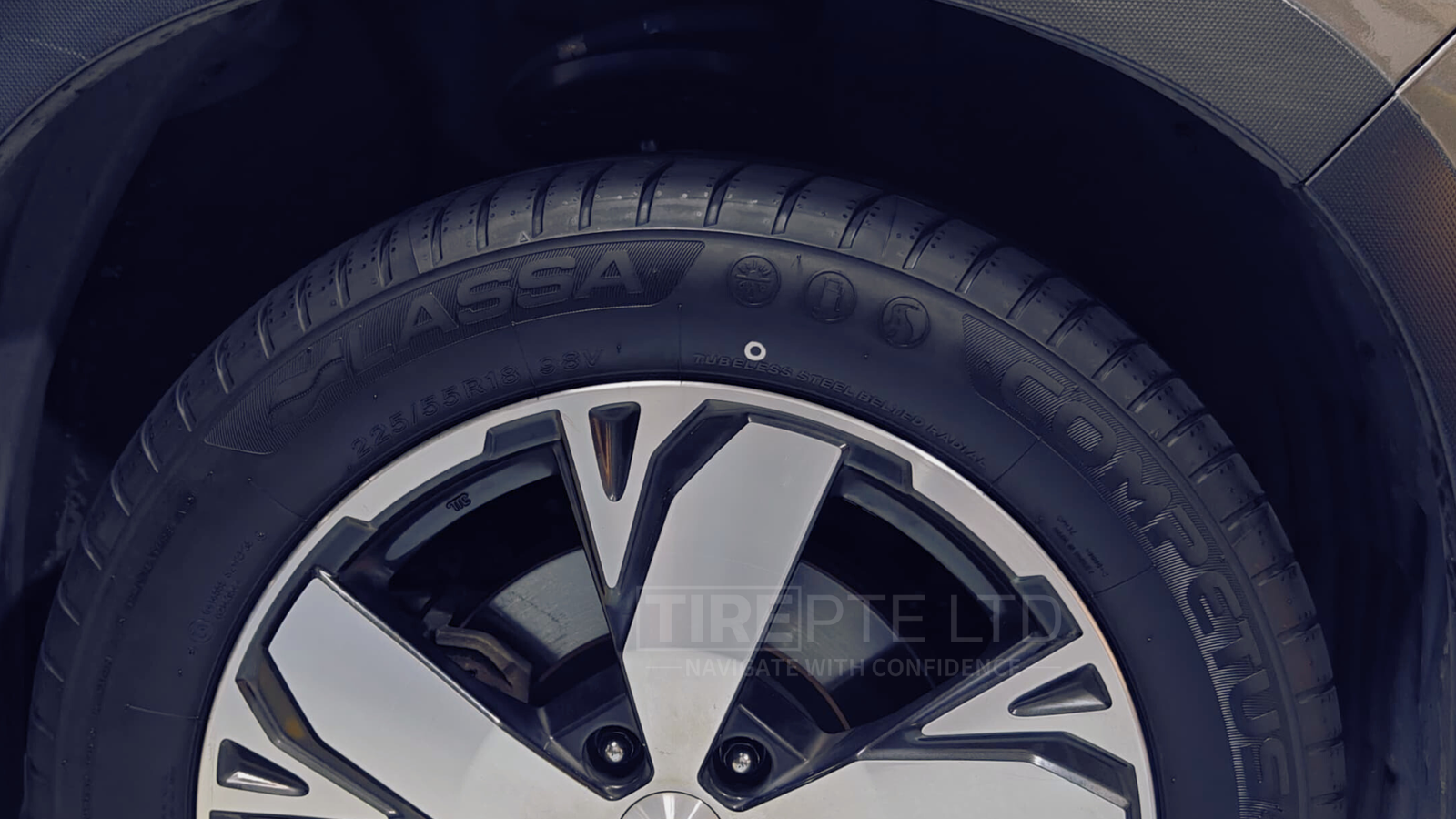
Tire sidewall markings provide vital information about the components that connect your vehicle to the road. Singapore’s drivers often miss these cryptic codes and numbers. Yet these markings are the foundations of safe driving, whatever your skill level behind the wheel.
Your tires need proper inflation—a spec you’ll find in sidewall markings—to substantially boost fuel economy and minimize tire wear. The sequence of numbers and symbols on your tire’s sidewall tells you everything from load index and speed rating to tire size and construction. To cite an instance, “225” as the first number shows the tire’s width in millimeters between sidewalls. The number after the slash, like “45”, tells you the aspect ratio—your tire’s profile height as a percentage of its width.
Your tire’s sidewall does two important things: it shields the inner carcass and boosts riding comfort as you take corners. On top of that, it shows the manufacturer’s details, brand name, tread pattern specs, and other information that are a great way to get help when you maintain or replace tires.
You don’t need to be a car enthusiast to understand these markings—they matter to every driver who wants the best safety and performance. This piece walks you through everything Singapore drivers should know to figure out tire sidewall markings. This knowledge helps you make smart choices when you buy new tires.
Related: How to Read Tire Size – A Simple Guide for Beginners
You can figure out your tire’s specifications by reading the alphanumeric code on its sidewall. The code’s first section contains three significant measurements that determine tire fit and performance.
???? Watch our Beginners 101 series on TikTok
Singapore drivers should understand the vital information about construction type and performance capabilities found in tire sidewall markings, beyond just size specifications.
Modern vehicles commonly use radial construction tires, indicated by the letter “R” in tire markings (such as P225/45R18). Steel cord plies running at a 90-degree angle to the centerline are the foundations of radial tires. This creates a distinct separation between sidewall and tread functions. Drivers benefit from a smoother ride, better fuel efficiency, longer lifespan, and superior high-speed stability with this design.
Bias-ply tires, marked with “B” or “D” for diagonal, employ multiple rubber-coated fabric plies in overlapping diagonal patterns at 30-45 degree angles. These tires are less frequent on Singapore roads. They are a great way to get advantages in specific situations, especially when you have off-road driving conditions. Their stiffer sidewalls and greater resistance to punctures make them ideal for rough terrain.
The two-digit number after the rim diameter in your tire code represents the load index. This code shows the maximum weight each tire can support with proper inflation. Passenger car tire load indices typically range from 75 to 105.
Each tire can safely carry up to 615 kg (1,356 lbs) with a load index of 91. Your vehicle’s total load capacity equals this figure multiplied by four—the number of tires. Safety depends on choosing replacement tires with the recommended load index or higher.
Speed rating, shown as the final letter in your tire’s code, indicates the maximum safe speed under optimal conditions. Singapore passenger vehicles typically have these ratings:
The speed rating does not give permission to exceed legal speed limits. A tire’s original speed rating becomes invalid if it gets damaged, repaired, under-inflated, or overloaded.
???? Watch our Beginners 101 series on TikTok
Tire sidewalls display many significant markings beyond size and performance ratings. These markings tell you more about your tire’s history, quality, and special features.
The DOT (Department of Transportation) code shows your tire meets safety standards. A four-digit number at the code’s end reveals the manufacturing date. The first two digits show the week, while the last two indicate the production year. To name just one example, “0619” means the tire was made in the 6th week of 2019. Natural materials in tires break down over time, so this date matters. Properly stored tires typically last five years.
Uniform Tire Quality Grading (UTQG) standards let consumers compare tires based on three vital factors. Treadwear grades range from 100-1000, with higher numbers pointing to longer tread life. Traction grades (AA, A, B, C) show how well tires stop on wet surfaces, with AA being the best. Temperature grades (A, B, C) indicate heat resistance – A-rated tires handle higher temperatures better than C-rated ones. All the same, manufacturers might be subjective when assigning these grades.
???? Watch our Beginners 101 series on TikTok
Run-flat tires keep working after a puncture. The sidewall might show RSC (Run Flat System Component), RFT (Run Flat Technology), SSR (Self Supporting Run Flat), or ROF (Run On Flat). These tires let you drive up to 80 kilometers at speeds up to 80 km/h after getting a flat. Original Equipment (OE) markings tell you which vehicle manufacturer the tire was designed for. “AO” means Audi, “MO” stands for Mercedes, and “*” represents BMW.
Feel confident about your drive. Need a quick tire safety check? Message us on WhatsApp at +65 6925 5296.
Knowledge about tire sidewall markings helps Singapore drivers make informed decisions when buying new tires. This understanding will give you safety, compliance, and optimal performance during the buying process.
Your vehicle’s recommended tire specifications should be checked before shopping. These details appear in three reliable places: your owner’s manual, the driver’s door jamb, or inside the fuel filler door. You might also find this vital information in the glove compartment. These sources provide complete information about tire size specifications and appropriate tire pressure.
Manufacturer-specific Original Equipment (OE) markings show tires designed for particular vehicle brands. You’ll see markings like “*” for BMW, “MO” for Mercedes, or “AO” for Audi. These vehicles need tires with the same OE marking to maintain performance characteristics.
Singapore regulations require all tires to maintain a minimum tread depth of 1.6mm across at least 75% of the tread width and around the entire circumference. More, the Land Transport Authority (LTA) enforces this requirement strictly to ensure road safety. Local workshops offer tread depth gages to verify compliance.
You should check for prohibited conditions before purchase: any cut exceeding 25mm or 10% of the tire width, bulges from structural failure, or exposed cord material. These problems make a tire illegal for Singapore roads.
A reliable tire shop will give you a better buying experience. Think about these factors:
Some shops offer valuable extra services like wheel alignment or mobile fitting options. Some provide a professional greeting, customised guidance based on driving style, and effective post-purchase assistance.
At Tire Pte Ltd, we provide tailored recommendations based on how you actually drive — not just your car model.
✅ Want better fuel economy?
✅ Daily city drives with passengers?
✅ Regular JB trips or long highway runs?
???? Book a free consultation and we’ll match you with the right tire for your habits, ensuring longer lifespan, better control, and peace of mind.WhatsApp +65 6925 5296
Every Singapore driver needs to know how to read tire sidewall markings to ensure safety and vehicle performance. These codes tell you everything about your tires – from width and aspect ratio to rim diameter, construction type, load capacity, and speed ratings. All these factors affect your driving safety and comfort.
Drivers who understand these markings can make better choices when buying new tires or checking their current ones. It also helps you track manufacturing dates, since all tires should be replaced within ten years, even if they’ve been stored properly.
Singapore’s regulations have strict safety requirements, especially when it comes to tread depth and tire condition. Of course, you should check your vehicle’s manual before getting new tires to match the manufacturer’s specifications perfectly.
Singapore drivers who know how to read tire sidewall markings can keep their vehicles running at peak performance while staying safe on the road. These markings are a great way to get the right information when you’re shopping for tires, doing maintenance checks, or making sure your tires meet legal requirements. Taking a few minutes to learn these markings will save you time and money, and maybe even prevent dangerous situations through proper tire care.
Understanding tire sidewall markings is crucial for Singapore drivers to ensure safety, legal compliance, and optimal vehicle performance.
• Ability to decode the size sequence: The three-part code (e.g., 225/65R15) shows tire width in millimeters, aspect ratio percentage, and rim diameter in inches.
• Ability to check load and speed ratings: The two-digit load index indicates maximum weight capacity per tire, while the letter speed rating shows safe maximum speed limits.
• Verify manufacturing date: The four-digit DOT code reveals production week and year—replace tires older than 10 years regardless of tread condition.
• Ensure legal compliance: Singapore requires minimum 1.6mm tread depth across 75% of tire width, with no cuts exceeding 25mm or exposed cord material.
• Match manufacturer specifications: Always consult your vehicle manual or door jamb for exact tire requirements, especially for cars with Original Equipment (OE) markings.
This knowledge empowers you to make informed tire purchases, maintain road safety, and avoid costly mistakes when replacing tires in Singapore’s regulated driving environment.
Q1. What does the manufacturing date code on my tire mean? The manufacturing date is represented by a four-digit code at the end of the DOT (Department of Transportation) number. The first two digits indicate the week, and the last two show the year of production. For instance, “0619” means the tire was manufactured in the 6th week of 2019.
Q2. How can I determine the load capacity and speed rating of my tires? The load index is a two-digit number following the rim diameter, corresponding to the maximum weight each tire can support. The speed rating is represented by a letter at the end of the tire code, indicating the maximum speed the tire can safely maintain under optimal conditions.
Q3. What are the legal requirements for tire tread depth in Singapore? In Singapore, all tires must maintain a minimum tread depth of 1.6mm across at least 75% of the tread width and around the entire circumference. This requirement is strictly enforced by the Land Transport Authority (LTA) to ensure road safety.