

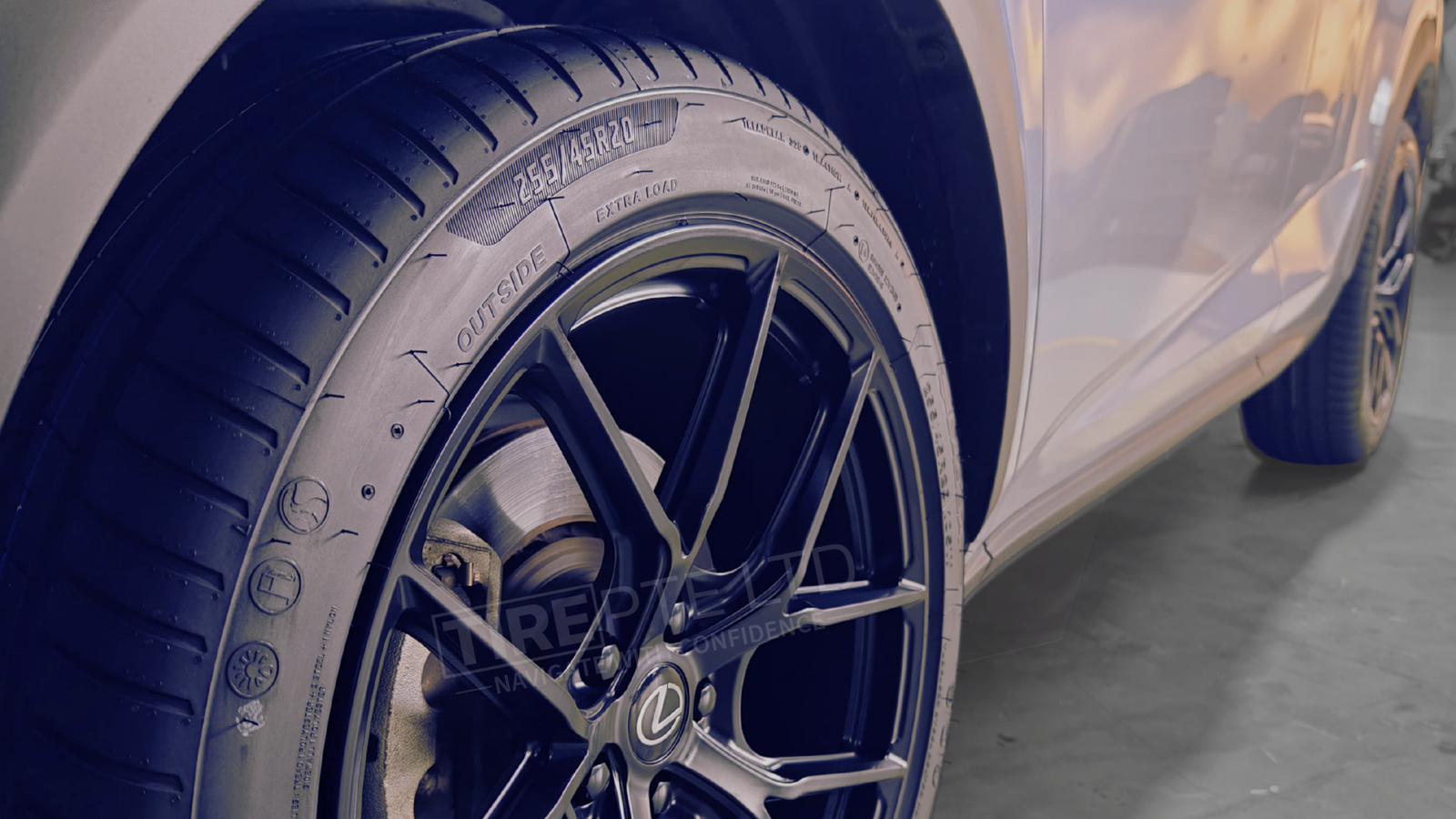
Did you know that tire size is the only point of contact between your vehicle and the road, making it a critical factor for safety, handling, and overall driving experience?
At first glance, those cryptic numbers and letters on your tire’s sidewall might seem like a confusing code. Indeed, understanding the tire size meaning involves deciphering several components – from the tire width measured in millimeters to the aspect ratio tire size meaning (the percentage of the tire’s height to its width). For example, in a P215/60R16 tire, the width is 215 mm, and the aspect ratio indicates the height equals 60% of the tire’s width.
For this reason, learning how to read tire size correctly is essential for every driver. The P-Metric system, introduced in 1976, is widely used for passenger vehicles in North America. Whether you’re comparing options through tire size comparison or simply want to maintain your vehicle properly, this guide will break down everything you need to know about interpreting those numbers on your sidewall – even if you’ve never popped the hood before.
Tire markings may initially appear as mysterious code, but they contain vital information about your tire’s specifications. Deciphering these markings is straightforward once you understand what each component represents.
The sequence of letters and numbers on your tire’s sidewall follows a standard format that reveals crucial details about your tire. This sequence typically includes:
Using P215/65R15 95H as an example:
Tire size information is most commonly found on the tire’s sidewall – the outer and inner “walls” on the sides of a tire. Additionally, you can locate this information in:
Knowing how to read these markings helps when purchasing new tires and ensures you select the correct specifications for your vehicle.
???? Watch our Beginners 101 series on TikTok
Each component in a tire size code carries specific meaning for performance, safety, and vehicle compatibility. Understanding these elements helps drivers make informed decisions when selecting new tires.
The first letter in tire size indicates its intended use. “P” stands for passenger vehicles including cars, SUVs, and minivans. “LT” designates light truck tires for vehicles capable of heavy loads or towing. “ST” indicates special trailer tires, while “T” represents temporary spares. European metric tires often have no prefix letter.
This three-digit number shows the tire’s width from sidewall to sidewall in millimeters. For instance, in P215/65R15, the tire is 215mm wide. Wider tires generally provide more road contact and traction but may reduce fuel efficiency.
The two-digit number after the slash represents the tire’s sidewall height as a percentage of its width. A tire with aspect ratio 65 means its sidewall height is 65% of its width. Lower aspect ratios typically indicate sportier handling, while higher ratios offer more comfort.
The letter “R” indicates radial construction, where cords run perpendicular (90 degrees) to the direction of travel. Radial tires offer better fuel efficiency, traction, and longevity. “D” designates diagonal (bias) construction with crisscrossing cords at 30-45 degree angles, generally used for off-road applications.
This two-digit number specifies the wheel diameter in inches that the tire fits. Ensuring correct rim diameter is crucial for proper tire installation and vehicle performance.
The two or three-digit number following the rim diameter is the load index, indicating maximum weight capacity when properly inflated. For example, a load index of 91 means the tire can support 1,356 pounds. Never install tires with lower load capacity than recommended by your vehicle manufacturer.
The final letter indicates the maximum speed capability under ideal conditions. Common ratings include S (112 mph), H (130 mph), and V (149 mph). This rating doesn’t suggest driving at these speeds but indicates heat resistance and handling capabilities at sustained velocities. Always choose tires with appropriate speed ratings for your vehicle.
???? Watch our Beginners 101 series on TikTok
Selecting appropriate tire sizes directly impacts your vehicle’s performance, safety, and comfort. Making informed choices requires understanding key factors beyond just how to read tire size markings.
Finding the correct tire size begins with consulting your vehicle’s documentation. Your owner’s manual contains manufacturer-recommended tire specifications tailored for your specific model. Furthermore, this crucial information appears on the driver’s side door jamb, inside the fuel flap, or within the glove compartment. These recommendations consider engineering factors affecting handling, braking, and fuel efficiency.
Online calculators simplify the process of evaluating different tire options. Tools such as allow direct comparison between two tire sizes, calculating differences in diameter, width, sidewall height, and revolutions per mile. Consequently, these tools help visualize how replacement tires might affect your vehicle’s performance. Above all, they show potential speedometer discrepancies that could result from size changes. tiresize.com
Upsizing typically enhances appearance and may improve handling on dry surfaces. However, larger wheels often require low-profile tires, resulting in a harsher ride and potentially reduced fuel efficiency. Conversely, downsizing can improve winter traction as narrower tires cut through snow more effectively.
Notably, experts recommend staying within 3% of your original tire’s overall diameter when making changes. Exceeding this limit can negatively impact vehicle dynamics and fuel consumption.
Tire size changes directly influence speedometer accuracy. Larger tires cause your speedometer to display a slower speed than you’re actually traveling, whereas smaller tires make it read faster. For instance, tires with 3% greater diameter would show 60 mph when you’re actually traveling at 63.3 mph.
Size alterations also affect handling characteristics and safety systems. Modern vehicles rely on wheel speed data for anti-lock braking and traction control, so significant size changes may require professional reprogramming.
Feeling overwhelmed by tire choices? Don’t worry – that’s exactly why we’re here. WhatsApp +65 6925 5296 Us.
Understanding tire size markings certainly transforms from a confusing code into valuable knowledge after breaking down each component. The combination of letters and numbers on your tire’s sidewall tells a complete story about its design, capabilities, and intended use. Most importantly, this knowledge empowers drivers to make informed decisions about their vehicle’s safety and performance.
Proper tyre selection has a major impact on handling, fuel efficiency, and your overall driving experience. That’s why understanding these specifications is essential, especially when you’re planning to buy tyres. Taking the time to learn them pays off throughout your vehicle ownership. Additionally, knowing how to manually measure tyre dimensions becomes a valuable skill when markings fade or when comparing replacement options.
Although tire specifications might seem technical at first glance, the systematic approach outlined above makes this information accessible to everyone—regardless of mechanical expertise. Consequently, you’ll gain confidence when purchasing new tires or discussing maintenance with professionals. This knowledge also helps prevent costly mistakes that could affect vehicle performance or safety.
Remember that your vehicle manufacturer selected specific tire sizes for optimal performance. Subsequently, any modifications should stay within recommended parameters to maintain proper speedometer readings and system functionality. Meanwhile, consulting your owner’s manual remains the first step when considering replacement options.
Feeling overwhelmed by tire choices? Don’t worry – that’s exactly why we’re here. WhatsApp +65 6925 5296 Us. After all, the right tire choice forms the foundation of your vehicle’s performance and your safety on the road.
Master tire size reading to make informed decisions about your vehicle’s safety, performance, and maintenance needs.
• Decode the sidewall formula: P215/65R15 means Passenger tire, 215mm width, 65% aspect ratio, Radial construction, 15-inch rim diameter.
• Find tire specs in multiple locations: Check sidewall markings, owner’s manual, driver door jamb, or glove compartment for accurate sizing.
• Stay within 3% of original diameter: Significant size changes affect speedometer accuracy and can disrupt safety systems like ABS.
• Match load index and speed ratings: Never install tires with lower capacity than manufacturer recommendations for optimal safety.
Understanding these tire fundamentals prevents costly mistakes and ensures your vehicle maintains proper handling, fuel efficiency, and safety system functionality.
Q1. How do I interpret the numbers and letters on my tire’s sidewall?
The tire size code contains important information about your tire’s specifications. For example, in P215/65R15, “P” indicates a passenger vehicle tire, “215” is the width in millimeters, “65” is the aspect ratio, “R” means radial construction, and “15” is the rim diameter in inches.
Q2. What does the aspect ratio in tire size mean?
The aspect ratio represents the tire’s sidewall height as a percentage of its width. For instance, if the aspect ratio is 65, it means the sidewall height is 65% of the tire’s width. A lower aspect ratio typically indicates sportier handling, while a higher ratio offers more comfort.
Q3. Can I change my tire size, and how will it affect my vehicle?
While you can change tire sizes, it’s recommended to stay within 3% of your original tire’s overall diameter. Significant changes can affect speedometer accuracy, handling, and safety systems. Always consult your vehicle’s manual and consider using a tire size comparison tool when selecting new tires.
Q4. Where can I find the correct tire size for my vehicle?
The recommended tire size for your vehicle can be found in several places: your owner’s manual, the driver’s side door jamb, inside the fuel flap, or within the glove compartment. Always refer to these manufacturer recommendations when selecting new tires.